How to Avoid Emotional Decisions When Price Moves Fast
A fast market can make a reasonable trading plan feel suddenly urgent. A candle jumps, an alert flashes, and it is tempting to enter before the move gets away—or exit simply because a position is briefly going against you. Those reactions are human. They are not, by themselves, a trading strategy.
The answer is not to eliminate emotion. It is to decide in advance what you will do when volatility makes emotion louder. A predefined plan, clear risk rules, and the discipline to wait for confirmation can help you respond to price rather than react to it.
https://gccexchange.com/blog/how-traders-can-confirm-indicator-signals-before-making-a-trading-decision/This guide is educational, not a recommendation to buy or sell any asset. Trading carries risk, and fast price moves can increase slippage and losses. Before acting, ask the question every trader should be able to answer: Where is the invalidation level?
Why Fast Price Moves Trigger Emotional Decisions
Rapid movement can create a sense that you must act immediately. If price rises, you may fear missing out. If it drops, you may fear losing more. Both feelings can push you to abandon a plan: chasing a late entry, widening a stop, closing too soon, or taking an oversized position to “make it back.”
These choices often happen because attention narrows. A trader fixates on the current candle or the potential profit and stops checking the larger trend, nearby resistance, or the amount at risk. A signal from an indicator can add to the urgency if it is treated as a command rather than one piece of information.
Slowing down does not mean ignoring the market. It means using a repeatable process to decide whether the move fits your conditions—and accepting that sometimes the best decision is to do nothing.
Build a Predefined Plan Before Volatility Arrives
A plan is useful only if it answers practical questions before you have money at risk. Write down the conditions that must be present for a trade, the conditions that cancel the idea, and how much you are prepared to lose. If you cannot state those points clearly, you may not have a complete plan.
Define the trade, not just the direction
“I think price will go up” is a view, not a complete trade plan. A more useful plan identifies the market context, a potential entry area, a confirmation condition, an invalidation point, and a risk limit. It also sets a rule for when you will not trade—for example, when price is moving erratically around a major news release or when the potential reward does not justify the risk.
- Context: What is the broader trend, and where is price relative to important support and resistance?
- Entry condition: What specific price action or candle close would qualify?
- Invalidation: At what price or structure change is the trade idea no longer valid?
- Risk: What is the maximum planned loss, including the possibility of slippage?
- Exit plan: Where might you take profit, reduce exposure, or reassess?
Do not move an invalidation level farther away simply because you dislike the loss. If the original idea is invalidated, the plan has done its job: it has given you a defined point to step aside.
Use Indicator Signals as Prompts, Not Instructions
Indicators can help organize information, but no indicator can guarantee what price will do next. A signal may appear during a short-lived spike, in the middle of a range, or directly beneath resistance. It needs context and confirmation.
For example, the Xhmaster Formula Indicator may be one tool a trader watches. Its signal should still be checked against price action, the broader trend, market structure, and nearby levels. The same principle applies to moving averages: they can help visualize trend direction or dynamic areas of interest, but they do not remove the need to assess the chart.
Before acting on any indicator, ask:
- Does the signal agree with the trend on the timeframe I am trading?
- Is price making a meaningful break or merely fluctuating inside a range?
- Is a nearby support or resistance zone likely to affect the trade?
- Has the candle closed in a way that confirms my condition?
- Where is the invalidation level, and does the potential trade still fit my risk rules?
An alert is not a setup by itself. The chart context, trigger, and risk plan are what turn an observation into a decision. If those pieces are missing, wait.
Check Trend Alignment and Market Structure
Fast moves can look more significant than they are when viewed in isolation. A sharp rise on a short timeframe may still be a pullback within a broader downtrend. Likewise, a sudden drop may be a retracement inside a wider uptrend. Checking more than one timeframe can help you avoid confusing a brief burst of momentum with a change in trend.
Moving averages can provide a simple visual reference. If price is consistently above a rising average, that may support a bullish trend reading; if it is below a falling average, that may support a bearish reading. But averages lag and can give mixed signals in sideways markets. Treat them as context, not a verdict.
Market structure provides another check. Look for the sequence of swing highs and lows, and ask whether price is making higher highs and higher lows, lower highs and lower lows, or moving within a range. A sudden candle that conflicts with the structure deserves attention, but it does not automatically prove the structure has changed.

Mark Support and Resistance Before You Need Them
Support and resistance are areas where price has previously paused, reversed, or shown increased activity. They are better treated as zones than as perfectly precise lines. When price moves quickly toward one of these areas, the possible reaction matters: a rally into resistance may stall, while a drop into support may attract buyers. Neither outcome is certain.
Mark relevant zones before considering an entry. Then assess whether there is enough room for the trade to develop. Entering just below resistance can leave little upside before an obstacle; selling directly into support can leave little downside before a potential bounce. Ignoring a nearby level and later blaming an indicator is a planning mistake, not an indicator mystery.
Consider waiting for price to test a zone and show a response. A rejection, a failed break, or a close beyond the zone may offer more information than a candle that is still forming. Your plan should specify which response matters and what would invalidate the idea.
Wait for Price Action and the Candle Close
A candle that is moving quickly has not finished telling you what happened. Its price can change before the period closes, and a brief move beyond a level may reverse by the end of the candle. That is why candle-close confirmation matters when your plan relies on a break, rejection, or reclaim of a level.
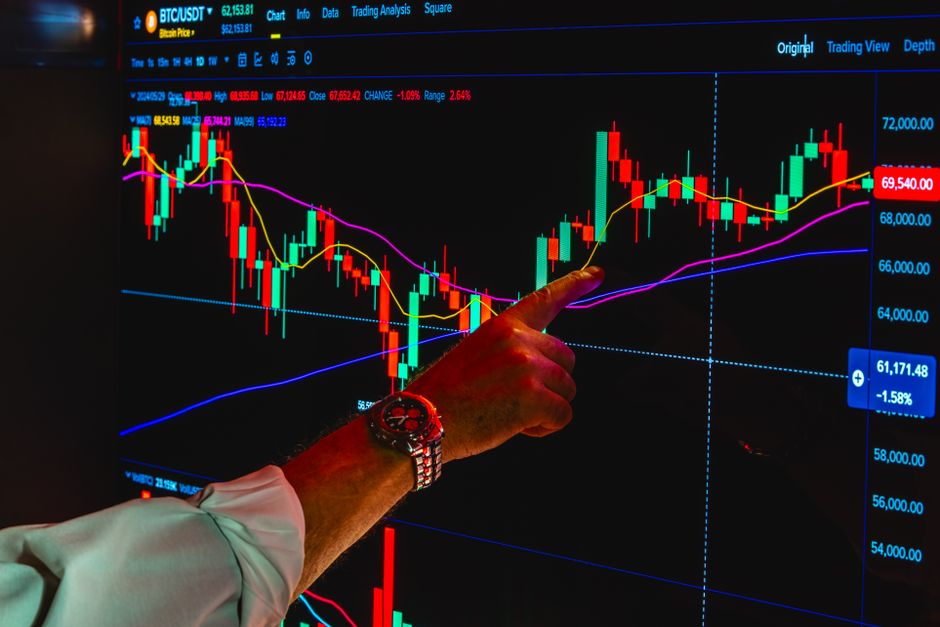
Waiting for the close can mean missing the earliest part of a move. That is the trade-off. In return, you avoid acting on some movements that fail to hold. The goal is not to catch every price swing; it is to take only the trades that meet your predefined conditions.
Make the timeframe part of the plan. If your confirmation rule is based on a 15-minute candle, do not switch to a one-minute chart mid-trade just to find a reason to enter early. Changing timeframes under pressure can make nearly any move look like confirmation.
Use Risk Rules to Reduce the Cost of Emotion
Position size is one of the few variables you can control before entering. Decide how much you can afford to lose on a trade, then size the position around the distance to your invalidation level. A wider stop generally means a smaller position if the planned cash risk is unchanged.
Risk rules can also cover behavior. For example, you might set a maximum number of trades per session, stop trading after reaching a daily loss limit, or require a short pause after a loss. These rules do not make trading safe or ensure a positive result. They create boundaries that make impulsive escalation less likely.
Fast-market temptation Disciplined response Chase a candle because it is moving quickly Wait for the planned trigger and candle close; accept a missed trade Widen a stop to avoid taking a loss Respect the original invalidation level or exit if the idea is invalidated Enter on an indicator alert alone Check trend, structure, support and resistance, and price action Increase size after a losing trade Follow the predefined risk limit and pause if emotions are affecting decisions Keep trading after the plan’s stop point End the session according to your daily rulesA Practical Checklist for a Fast Market
When price starts moving quickly, use a short checklist instead of trying to think through everything at once. If you cannot confirm the key conditions, do not force a trade.
- Pause. Take a breath and avoid placing an order while reacting to a single tick or unfinished candle.
- Check context. Identify the broader trend, market structure, and the nearest support and resistance zones.
- Review the signal. Treat the Xhmaster Formula Indicator or moving averages as supporting tools, not standalone instructions.
- Wait for confirmation. Let the relevant candle close if your plan requires a close beyond or within a level.
- Locate invalidation. Ask, “Where is the invalidation level?” If you cannot answer, do not enter.
- Check the risk. Confirm that position size, stop distance, and potential loss fit your risk rules.
- Accept the outcome. A valid plan can still lose. Do not alter it impulsively to avoid discomfort.
Make the Routine Work Across Different Markets
The same decision process can help whether you are reviewing currency pairs, equities, or other instruments. The details differ: trading hours, liquidity, spreads, and market structure can all affect how a fast move behaves. A platform or company name does not change the need to understand those conditions. For instance, traders researching services from GCC Exchange or TMGM should still evaluate the relevant products, costs, execution conditions, and risks independently before making decisions.
Pay particular attention to execution during volatile conditions. Orders may fill at a different price than expected, and stops may not eliminate the possibility of a larger-than-planned loss. Account for these possibilities when choosing position size and deciding whether the market is suitable for your plan.
Review Decisions, Not Just Results
After the market calms down, record what you did and why. Note whether the trade met your entry criteria, whether you waited for the candle close, and whether you respected the invalidation level. Separate process quality from outcome: a well-planned trade can lose, and a rushed trade can win by chance.
A short journal can reveal recurring emotional triggers. Perhaps you chase after a large candle, enter too close to resistance, or abandon a plan after one losing trade. Once you identify the pattern, add a specific rule to address it. Discipline is built through repeated decisions, not through trying to feel nothing.
Slow the Decision Down
You cannot control how quickly price moves, but you can control whether urgency gets to rewrite your plan. Use indicators for context, check trend alignment and market structure, respect support and resistance, and wait for the price action your plan requires. Most importantly, know where the trade is invalidated before you enter.
When the market is moving fast, a clear “no trade” is a complete decision. Protecting your capital and following your risk rules matter more than participating in every move. Wait for the candle close, follow the predefined plan, and let discipline—not adrenaline—decide what happens next.